
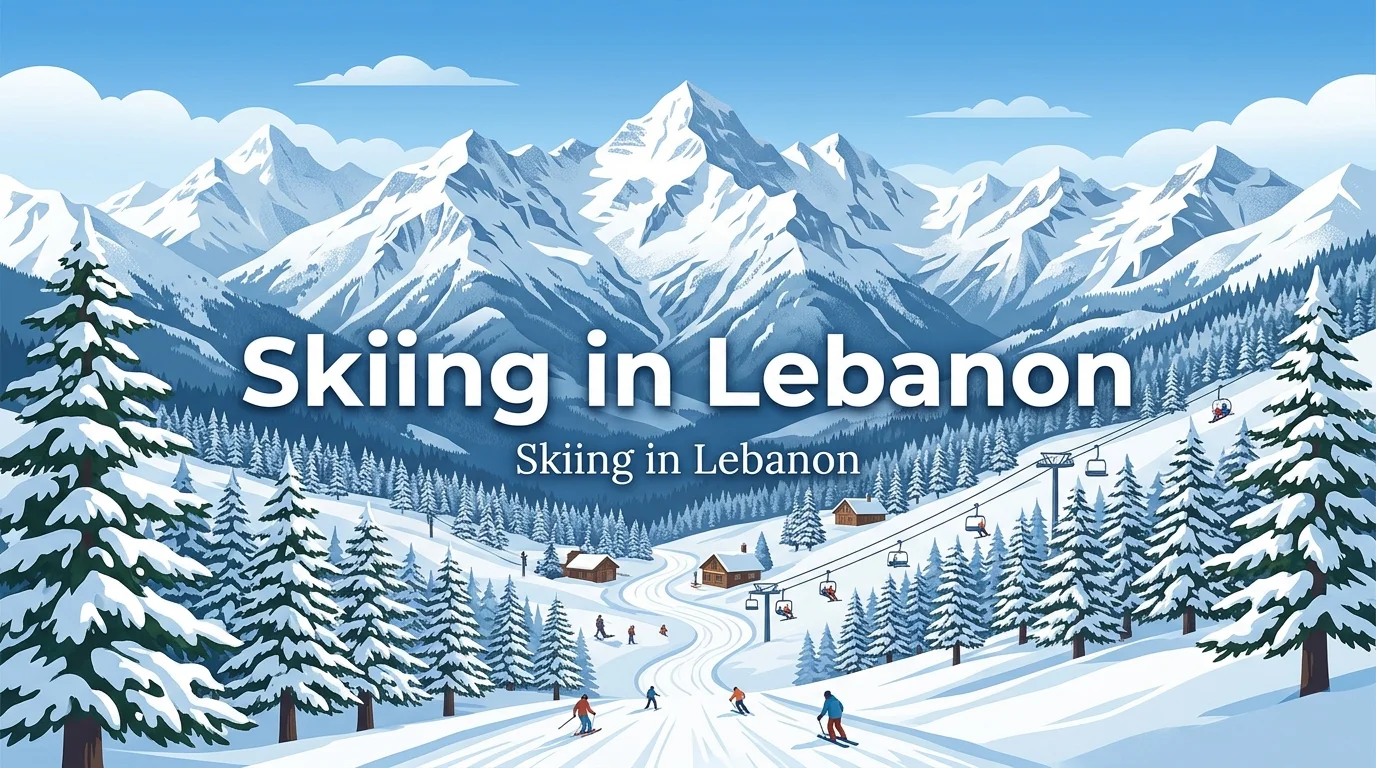
Few countries let you swim in the sea in the morning and ski by afternoon, and fewer still have a ski scene with its own character. Skiing in Lebanon has a loyal following among locals and the diaspora, with resorts that run from lively and social to small and quiet. The mountains rise quickly from the coast, so a weekend on snow is often closer to Beirut than people expect.
This guide compares the main Lebanon ski resorts, explains when the season runs, what to expect from conditions and how to plan a trip that works. A note first: conditions in Lebanon can change quickly. Before planning any trip, read our guide on whether Lebanon is safe to visit and check your own government’s advice, since some areas of the country carry warnings. Keep bookings flexible.
When is the ski season in Lebanon?
The season generally runs from around December to March, with the best snow usually in January and February. It varies a great deal from year to year. A snowy winter can open resorts early and keep them going into spring, while a dry one can shorten the season and limit the open runs.
This is why timing matters more than most visitors expect. Lifts open only when snow cover allows, and resort conditions can change within days. Check the current status on the resort’s official channels shortly before you travel, and avoid committing to a fixed date far in advance. Our guide to the best time to visit Lebanon explains how winter fits into the wider year.
The main ski resorts in Lebanon
Mzaar Kfardebian (Faraya): the largest and busiest
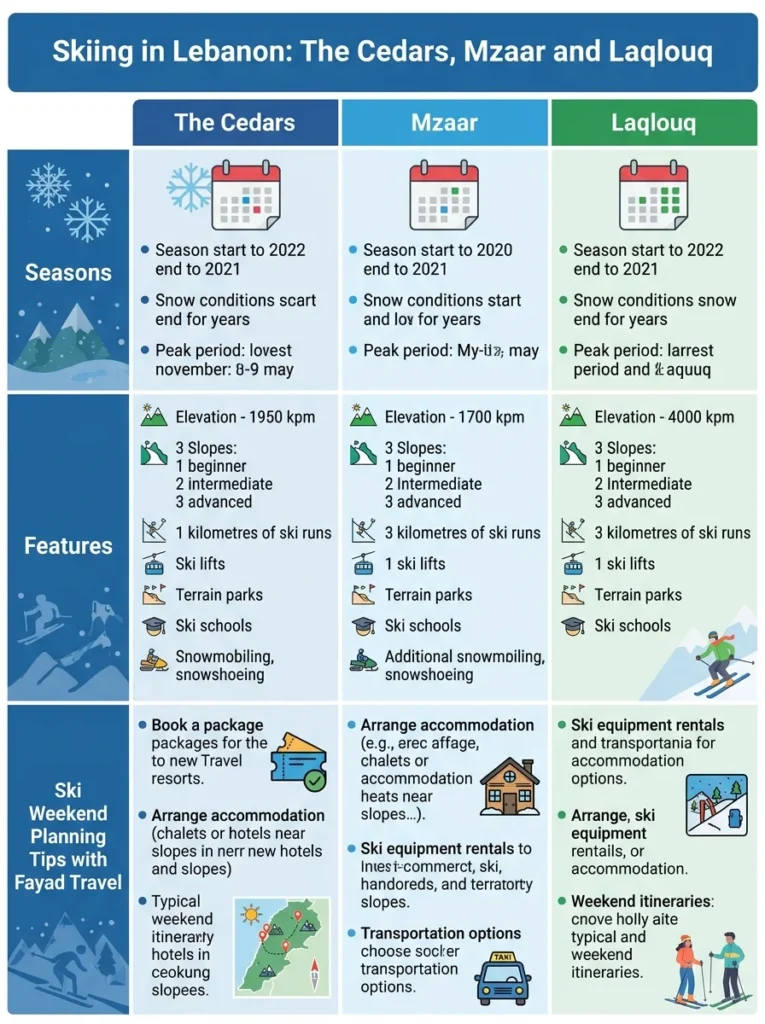
Mzaar, in the Faraya area north of Beirut, is the biggest ski destination in the country and the one most visitors mean when they say “Lebanon skiing”. It offers a wider choice of runs, a larger lift network than its neighbours and a lively atmosphere, with restaurants, rentals and lessons close at hand. It suits mixed groups, since beginners and stronger skiers can share a day.
The trade-off is crowds. Weekends in peak season can be busy, with queues and traffic on the road up. If you can, go midweek, or arrive early.
The Cedars: high, scenic and traditional
The Cedars, in the north near Bsharri, sits at higher altitude, which often helps snow last longer. The setting is its draw: mountain scenery, a more traditional village feel and proximity to the famous cedar forest. The ski area is smaller and slower in pace than Mzaar.
Getting there takes longer from Beirut, and the road can be affected by weather. It suits travelers who value atmosphere over variety and who are happy to build in extra travel time. Check the latest advisories for the region before you plan.
Laqlouq: compact and family-friendly
Laqlouq is smaller and quieter, and it works well for families, beginners and anyone who wants an easy day on snow. Fewer runs mean less choice, but also less pressure. It is a good option for first-time skiers or for a mixed group in which some members would rather sit with a hot drink.
Zaarour and Faqra: nearby alternatives
Other areas near Beirut, including Zaarour and the private Faqra Club, offer different styles of mountain stay. Some are private or membership-based, and facilities vary. If you are interested in these, confirm access, rules and conditions with the operator before planning around them.
A note on Mount Hermon
Mount Hermon lies in a sensitive border area in the south and is not a destination we would suggest. If a tour or resort offers access there, check official advice carefully and think hard before going.
Which resort suits which traveler?
If you want variety, atmosphere and facilities, Mzaar is the natural choice. If you prefer scenery and a quieter pace, the Cedars rewards the longer journey. If you are traveling with young children or learning to ski, Laqlouq keeps things simple. These are general impressions, not guarantees, since conditions and services change each season.
A realistic illustration: a group of four friends of mixed ability might base themselves near Faraya, spend a day on the main slopes and a second morning at a smaller resort for the more nervous skier, then return to Beirut for dinner. That kind of flexibility is one of the pleasures of Lebanon’s compact geography.
How to plan a ski weekend from Beirut?
Most ski days begin with a drive of roughly one and a half to three hours from Beirut, depending on the resort, traffic and snow. Roads can be icy or congested, so plan extra time and leave early.
Getting there
Consider hiring a private driver who knows the mountain roads and conditions, especially if you are not used to driving in snow. If you drive yourself, check that your vehicle is suitable, carry snow chains where required and fill the tank before climbing. Weather can close roads or slow traffic, so keep an eye on forecasts.
Where to stay?
You can ski as a day trip from Beirut or stay in the mountains. A night near the slopes saves early starts and lets you enjoy the evening atmosphere. Book early for weekends and holiday periods, and choose cancellation terms that allow for weather changes.
Equipment, lessons and passes
Most resorts offer equipment rental, lessons and lift passes, though availability and prices vary. If you own gear, bring it. If not, rent early in the day and check boots carefully, since poor-fitting boots ruin a day. Beginners should book a lesson, and everyone should check the current rules for helmets and safety equipment at their resort.
What to wear?
Layering matters more than any single item. Pack thermal base layers, a waterproof outer layer, gloves, a hat, sunglasses and sun protection, since glare at altitude is strong. Our guide to packing for Lebanon’s four seasons covers clothing for winter conditions in more detail.
Combining skiing with the rest of Lebanon
A strength of the country is how easily winter on snow can pair with city time. Many visitors combine a ski day with a stay in Beirut, a meal in the mountains or a visit to a heritage site once the weather clears. Winter is also a good time for cafés, museums and food without the summer heat, as our first-time visitors guide explains.
If you are staying a few days, think about balancing active mornings with slower afternoons. After skiing, a long lunch with local food is hard to beat.
Safety on the slopes
Mountain safety is its own subject. Stay on marked runs, follow lift and patrol instructions and check avalanche or weather warnings where they apply. Ski within your ability, take breaks and keep hydrated. If you are going off-piste or into unmarked terrain, use a qualified guide, because unexploded ordnance remains a hazard in some parts of the country and conditions can be dangerous.
Check your travel insurance too, since some policies exclude winter sports or limit cover for activities in countries with government advisories. Our guide to travel insurance for Lebanese travelers explains what to look for.
If you would rather ski abroad
Some travelers prefer to leave the country for a ski holiday, especially when conditions at home are uncertain. Europe and the Caucasus offer well-developed resorts, though each destination has its own visa and travel requirements. We will cover those options, including visa effort and costs, in a dedicated guide to ski holidays from Lebanon.
Frequently asked questions
Usually January and February, when snow is most reliable. The season generally runs from around December to March, but it varies each year, so check live conditions.
Mzaar Kfardebian in Faraya is the largest and most developed. The Cedars suits travelers who value scenery and altitude, and Laqlouq works well for families and beginners.
Many are within roughly one and a half to three hours by road, depending on the resort and conditions. Allow extra time on snowy days and weekends.
Yes. Resorts offer lessons and gentler slopes, and smaller areas such as Laqlouq are well suited to first-timers.
Not always, but snow and ice can affect mountain roads. Check conditions, carry chains if required and consider a driver who knows the route.
Plan a winter weekend in the mountains
A good ski trip comes down to timing, transport and flexibility. When conditions allow, Fly Fayad local team can help you choose a resort, arrange drivers and stays and shape a weekend around your group, with plans that can adapt to weather and circumstances. Plan a winter weekend with our team.
Snow conditions, resort operations and travel advisories change quickly. Always check live resort updates, current weather and your own government’s travel advice before you travel.