

Lebanon packs a lot into a small country. Roman temples, mountain villages, coastal cities and a food scene that people cross oceans for sit within a couple of hours’ drive of each other. Before any of that, though, comes a practical question that deserves a straight answer: what are the Lebanon visa requirements for your passport, and what will border officers expect to see when you land?
This guide explains how entry to Lebanon generally works for foreign visitors, who may receive a visa on arrival, who needs to arrange something in advance, what documents to carry and which situations call for extra care. It also covers visitors of Lebanese origin who hold foreign passports, a large group that often gets conflicting advice. Rules change, so use this as a planning framework and confirm the details with official sources before you fly.
Do you need a visa to enter Lebanon?
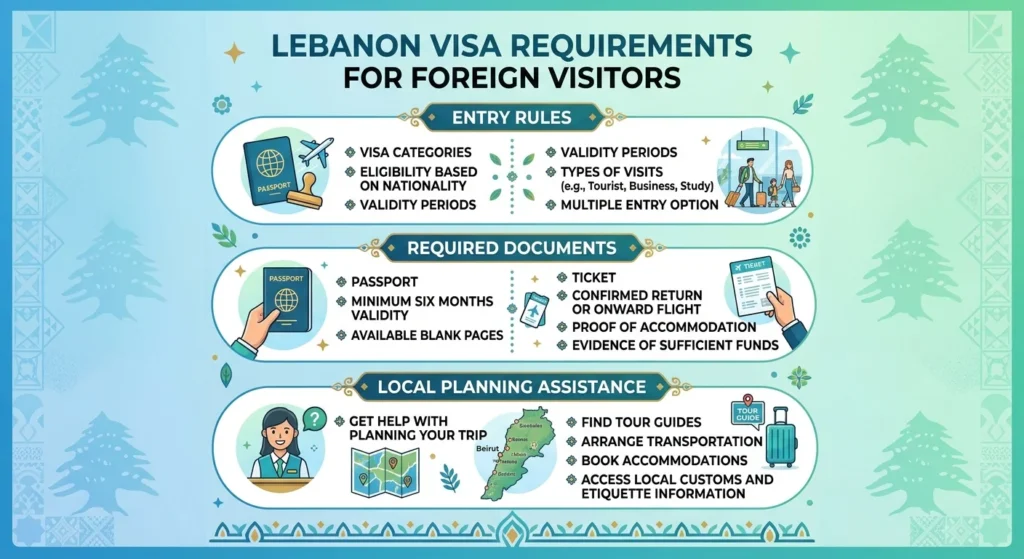
It depends on your nationality, and sometimes on your circumstances. Lebanon’s General Security authority, which oversees entry and residency, sets the rules. In broad terms, travelers fall into three groups.
Citizens of many countries can receive a visa on arrival at Beirut’s Rafic Hariri International Airport, which allows a stay of up to a set period and can usually be extended. Citizens of some other countries must obtain approval in advance through a Lebanese embassy or consulate, or through a sponsor in Lebanon. And for certain nationalities and situations, entry is restricted or not permitted.
Because the lists are long and change over time, the safest approach is to check the official General Security website or contact the Lebanese embassy in your country. Do not rely on forum threads or old blog posts. A rule that applied last year may not apply today.
Visa on arrival: what to expect at Beirut airport
If your nationality qualifies, you typically receive your entry stamp or visa at passport control without applying beforehand. The process is usually short, but officers may ask about the purpose of your visit, where you will stay and how long you plan to remain.
Be ready with the basics. Keep a return or onward ticket accessible, along with a hotel booking or the address of your host, and some evidence of funds. You may not be asked for all of it, but being prepared turns a potential delay into a two-minute conversation.
If you arrive with a group, a tour operator’s confirmation letter can speed things up. Ask your host or tour company to provide contact details for emergencies, and keep them on your phone.
Visitors who need advance approval
If you are among the nationalities that cannot receive a visa on arrival, the process starts before you book flights. Typically, you apply through a Lebanese diplomatic mission, and some cases involve a sponsor in Lebanon who submits documents to the authorities on your behalf. Processing times differ, and an approval is not guaranteed.
Start early and do not buy non-refundable tickets until you have approval in hand. Keep copies of everything you submit, including the sponsor’s details, because you may need to show them at the airport.
If you travel for work, study or any purpose other than tourism, the rules differ again. Work and residence permits are separate processes, and business visitors should confirm which category fits their activities before they arrive.
Documents to carry when you travel to Lebanon
Border staff do not all ask for the same things, but a sensible document pack covers the most common questions.
- A passport with sufficient validity for your stay, and blank pages. Check the minimum validity rule before you travel, since it varies.
- Your visa or approval, if you needed one, printed or on your phone.
- A return or onward ticket.
- Accommodation details for your first nights, or your host’s address and phone number.
- Some proof of funds, such as a bank card or recent statement.
Make photocopies, keep digital copies in a secure place and bring a spare passport photograph in case a document needs replacing. Our pre-travel checklist for Lebanon goes through the rest of the packing and planning list, and our guide to travel essentials for first-time visitors covers money, connectivity and getting around.
Visitors of Lebanese origin with foreign passports
Many people with Lebanese roots carry a foreign passport and visit family regularly. Their situation depends on whether they are also Lebanese citizens, and on how they identify themselves at the border.
Lebanese citizens generally enter and leave using Lebanese documents, even if they also hold another nationality. Dual nationals should confirm in advance which document to use at each border crossing, and whether any registration or paperwork is needed for family members, including children. Descendants who are not registered as citizens may be treated as foreign visitors, and the rules for them vary.
Because this area involves nationality law, ask the Lebanese embassy or a qualified adviser before you travel, especially with children. Our guide on documents for children traveling from Lebanon covers the departure side of family travel.
Passports with certain stamps or histories
Some visitors face extra scrutiny or refusal because of their travel history. Lebanon does not admit holders of Israeli passports, and evidence of travel to Israel in a passport can cause problems for entry. If your travel history includes such stamps or visas, check the official position before you book rather than at the airport.
The same principle applies to any unusual circumstance, such as a recent passport replacement or a name change. If something in your passport might raise a question, carry the documents that explain it.
Check your home government’s travel advice
Beyond visa rules, visitors need current information about conditions on the ground. Many governments publish travel advisories for Lebanon, and those advisories change as circumstances change. Read the advice from your own government before you book, and check it again shortly before you travel. Sections of the country may carry different levels of caution, and insurance policies may be affected by an advisory.
We’ll cover how to assess current conditions in a dedicated guide on whether Lebanon is safe to visit. For now, treat the official advisory for your nationality as the baseline, and keep your plans flexible.
Money, connectivity and arriving smoothly
Practical details can make a bigger difference to your first day than the visa itself. Lebanon’s banking and payment situation has been unusual in recent years, and US dollars are widely used alongside the local currency. Carry enough cash in small notes for the first days, and check your bank’s policy on card use abroad. Mobile data and SIM options are available at the airport, but confirm your phone is unlocked before you travel.
Plan your airport transfer in advance so you are not negotiating after a long flight. Our guide to airport meet and assist services in Beirut explains what a pre-arranged arrival can include, and our guide for first-time visitors to Lebanon helps you decide how to spend your first days.
Common mistakes visitors make
Assuming a visa on arrival applies to everyone. It does not. Check your nationality’s rules before you buy tickets.
Carrying no proof of onward travel or accommodation. You may not be asked, but if you are, having nothing to show slows things down.
Relying on outdated information. Rules change, so check official sources and date-stamp what you read.
Ignoring the family and nationality details. If you or your children have Lebanese roots, resolve which documents to use before the trip.
Not telling anyone where you are going. Share your itinerary and accommodation with someone at home and keep your embassy’s contact details handy.
Frequently asked questions
It depends on your nationality. Many travelers can receive a visa on arrival at Beirut airport, while others must arrange approval in advance. Check the official General Security website or your nearest Lebanese embassy.
The permitted stay depends on your nationality and the visa you receive, and extensions are often possible. Confirm the period at entry and note the date on your stamp.
Evidence of travel to Israel can lead to problems at entry, and holders of Israeli passports are not admitted. If this applies to you, check the official position before you travel.
If you are a Lebanese citizen, you will generally need to use Lebanese documents at the border, even with another nationality. Ask the embassy or a qualified adviser, particularly if you are traveling with children.
Conditions change, so read your own government’s travel advice before you book and again before you travel. A local planning team can help you adjust routes and timing as conditions evolve.
Plan your Lebanon trip with a local team
Entry rules are only the first step. Once you are clear on the paperwork, the real work is building a trip that makes sense: the right regions, pacing, drivers and guides, and plans that can adjust if needed. Fayad Travel’s inbound team designs private tours across Lebanon and can help you with arrival arrangements, accommodation and local guidance. Plan your private tour in Lebanon, or read our guide on hosting foreign visitors in Lebanon if you are welcoming guests.
Entry rules and travel advisories change. Always confirm current requirements with the Lebanese General Security authority, a Lebanese embassy or your own government before you travel.