

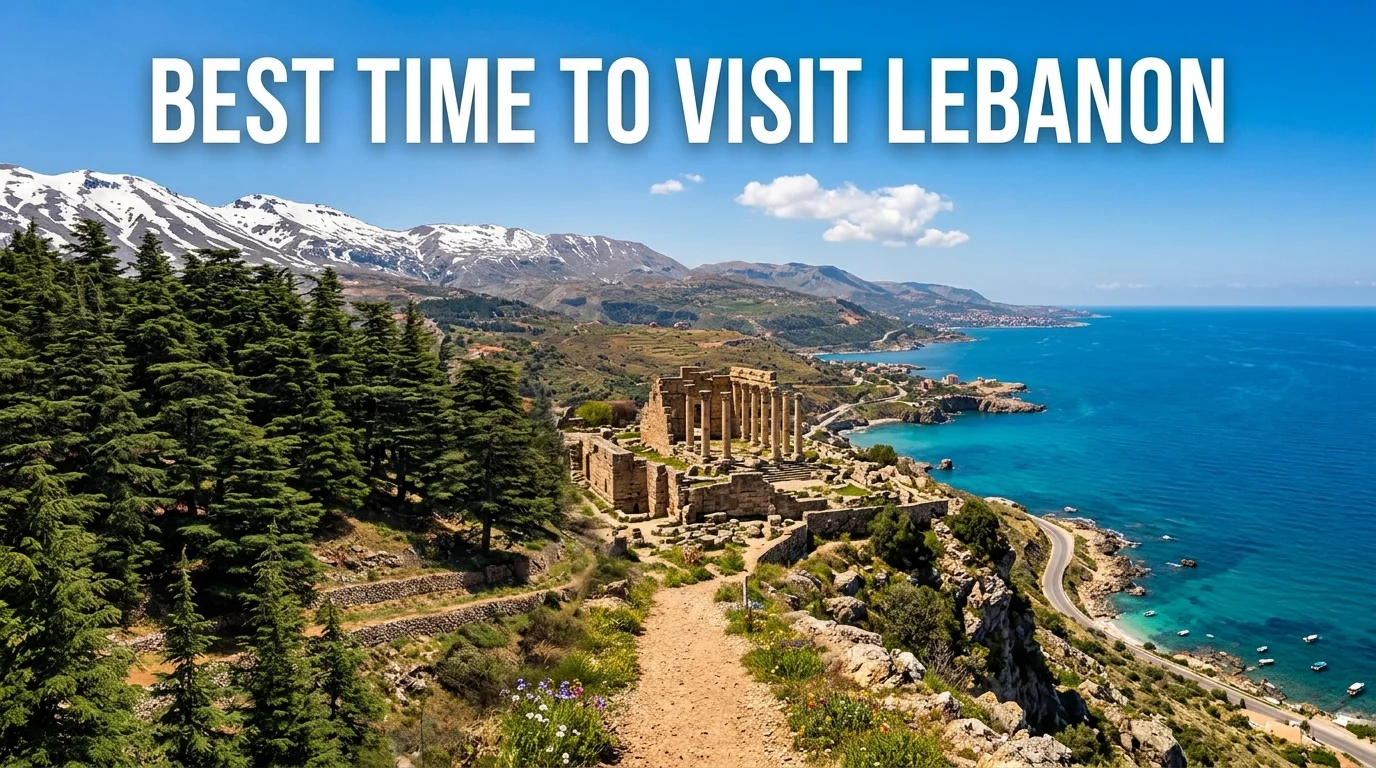
Lebanon is one of the few places where you can plan a morning on a ski slope and an afternoon at the beach in the same season. That range is also why the question of the best time to visit Lebanon has no single answer. The right month depends on what you want from the trip: swimming, hiking, skiing, wine harvests, festivals, or simply a comfortable walk through old souks without melting.
This guide walks through the year season by season, with notes for each month, so you can match your dates to your priorities. Weather figures are approximate and vary by altitude and year, since coastal Beirut and the high mountains can feel like different countries on the same day.
How Lebanon’s climate works?
Lebanon has a Mediterranean climate, with hot, humid summers on the coast and cooler, wetter winters. The difference between the coast, the mountains and the Bekaa Valley is what makes planning interesting. Beirut and the shoreline stay mild in winter and sticky in summer. The mountains are cooler year-round, and many peaks hold snow for months. The inland Bekaa Valley is drier, hotter in summer and colder on winter nights.
In practice, this means you rarely choose a single climate. You choose a base and then use the geography to adjust. A traveler who finds Beirut too warm in August can drive up into the mountains and feel the temperature drop within an hour. If you need advice on clothing for each season, our guide to packing for Lebanon’s four seasons covers the details.
Spring (March to May): wildflowers, hiking and mild days
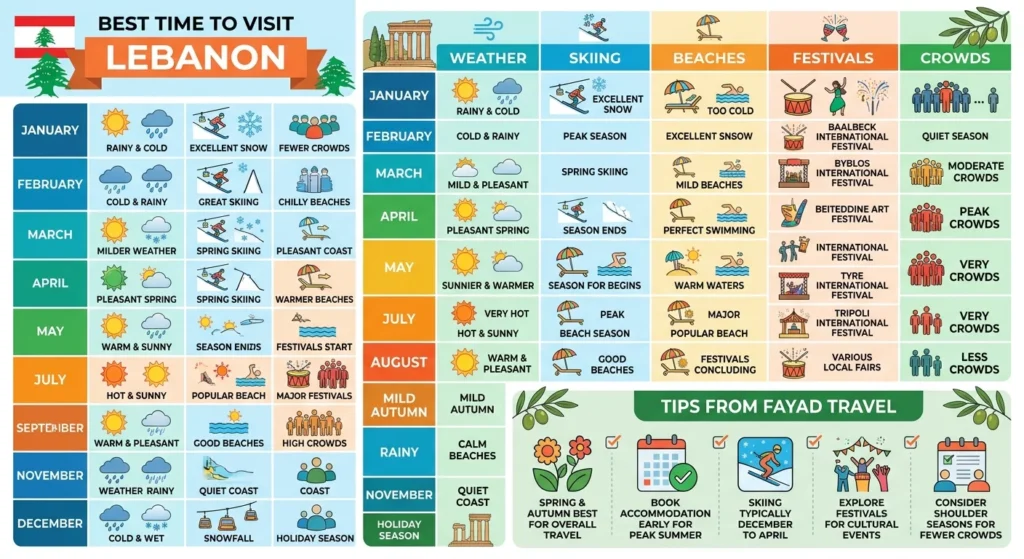
Many visitors consider spring the sweet spot. March is variable, with showers still possible and snow lingering in the high mountains. By April, the countryside turns green, wildflowers bloom and temperatures are comfortable for walking in cities and visiting archaeological sites. May warms up further, and the sea begins to feel inviting for brave swimmers by the end of the month.
This is a strong season for hiking, since trails are open and the heat has not yet become a problem. It is also a good time for visiting Roman sites such as Baalbek and Tyre, where shade is limited and midday sun in summer can be tiring. Crowds are moderate, and hotel prices are often better than in peak summer.
The trade-off is unpredictability. A cold, rainy day is still possible early in the season, so keep a light jacket in your bag.
Summer (June to August): beaches, festivals and the busiest weeks
June is warm and lively, and the beach season is in full swing. July and August are the hottest and most humid months on the coast, and they are also the busiest, because many members of the Lebanese diaspora return for family visits. Flights and hotels fill up, and prices rise.
Summer is the season for beach clubs, seaside restaurants and long evenings outdoors. It is also when several cultural festivals take place, often in historic settings. Festival programs change from year to year, so check the current schedule rather than relying on an old listing. Our guide to festivals in Lebanon worth planning your trip around can help you decide which events fit your dates.
If you prefer to avoid peak heat, plan your coastal sightseeing for the morning and evening, and spend afternoons in the mountains or in air-conditioned museums. Book accommodation and transport early in July and August, since availability tightens.
Autumn (September to November): warm sea, harvests and quieter roads
Autumn is the connoisseur’s season. September often keeps summer’s warmth with fewer crowds, and the sea is at its warmest. October brings pleasant temperatures, golden light and the grape harvest in wine regions, which usually runs from late summer into autumn. November cools down, and rain becomes more likely as the month progresses.
This is an excellent time for food-focused trips, vineyard visits and village stays. It is also a good window for first-time visitors who want comfortable weather without the summer rush. Roads are quieter, and prices tend to ease after the peak.
Be aware that autumn can bring sudden storms near the end of the season. If you are planning mountain hikes, check the forecast daily and allow flexibility in your schedule.
Winter (December to February): snow, cozy cities and festive weeks
Winter in Lebanon is wetter and cooler, but it has its own appeal. December brings festive lights, markets and family gatherings, and diaspora visitors return again for the holidays, so hotels and flights can fill up around Christmas and New Year. January and February are the rainiest months, with snow in the mountains.
This is the ski season, typically running from around December into March depending on snowfall. Lebanon’s resorts are within a few hours of Beirut, which makes it possible to combine a city stay with a day or weekend on the slopes. We’ll cover the resorts in detail in a dedicated guide to skiing in Lebanon.
Winter is also a good time to explore museums, cafés and restaurants without summer’s heat, and to enjoy traditional food in village houses. The coast stays mild enough for walks, though swimming is not the plan. Pack layers, a waterproof jacket and shoes with good grip.
The best time to visit Lebanon by interest
If you are choosing dates around an activity, these pairings help:
- Hiking and nature: April to June and September to October, when temperatures are comfortable and trails are open.
- Beaches and sea swimming: June to September, with the warmest water at the end of summer.
- Skiing and snow: roughly December to March, depending on conditions.
- Wine and food: late summer through October, around the harvest.
- Culture and archaeology: spring and autumn, when midday heat is manageable.
These are guidelines rather than guarantees. Weather patterns shift, and a single year can run early or late.
Crowds, prices and the diaspora effect
Lebanon’s calendar is shaped by more than weather. The summer months and the December holidays are peak periods for the diaspora, which means busy flights, full hotels and higher rates. If you are flexible, traveling in the shoulder seasons of spring and autumn gives you better availability and a calmer pace.
If you must travel in peak weeks, book flights, hotels and private drivers early, and consider building in a quieter base in the mountains or the north to balance the busier days. A planner who knows the local calendar can help avoid clashes with major events or road congestion.
Check conditions before you book
Beyond weather, practical conditions in Lebanon can change, and travelers should read their own government’s advice and confirm entry rules before booking. Our guide to Lebanon visa and entry requirements explains how entry works for foreign visitors, and our pre-travel checklist for Lebanon covers the final preparations. Keep your plans flexible and choose accommodation with reasonable cancellation terms.
How long to stay and what to combine?
Many first-time visitors underestimate how much there is to see. A week lets you combine Beirut with Byblos, Baalbek, the mountains and a coastal stop, while a long weekend works well for a focused city and food trip. Our guide for first-time visitors to Lebanon suggests how to prioritize, and our guide to day trips from Beirut shows what you can see without changing hotels.
Your season should shape your route. In summer, balance the coast with the mountains. In winter, pair Beirut with a ski day. In spring and autumn, add a hiking day or a wine tasting.
Frequently asked questions
For many travelers, April, May, September and October offer the best balance of weather, sightseeing and crowds. The best month for you depends on whether you want beaches, snow, hiking or festivals.
July and August are the hottest and most humid months on the coast. The mountains are noticeably cooler, so many visitors split their time between the two.
Yes, usually from around December to March, depending on snowfall. Conditions vary, so check resort updates before you plan a trip.
The swimming season usually runs from around June to October, with the sea at its warmest in late summer and early autumn. Some visitors swim earlier or later, but water temperatures are lower.
Prices tend to peak in July and August and around the Christmas and New Year holidays, when the diaspora returns. Book early if you travel during those weeks.
Plan your trip around the right season
The best time to visit Lebanon is the time that matches your priorities, and a little planning goes a long way toward making those weeks count. Fayad Travel’s inbound team designs private itineraries around your dates, from coastal escapes to mountain stays and cultural routes, with local drivers and guides. Build a Lebanon itinerary around your dates, or start with our guide to what to know before your first visit.
Weather, events and conditions change from year to year. Always check current forecasts, festival programs and official travel advice before you book.