

Japan rewards planning like few other destinations. Trains run to the minute, hotels book out months ahead for cherry blossom season and the paperwork asks for a level of detail that surprises first-time applicants. For Lebanese travelers, the first item on the checklist is the visa, and understanding how the Japan visa for Lebanese citizens works makes the rest of the trip far easier to organise.
This guide explains whether you need a visa, where to apply, which documents to prepare, how to build a day-by-day itinerary that satisfies the embassy and how to time your application around spring blossom season. If you are still choosing a destination, our guide to cherry blossom travel and spring destinations shows why Japan tops many wish lists.
Do Lebanese citizens need a visa for Japan?
Yes. A visa is required for Lebanese passport holders visiting Japan for tourism and business, and there is no visa on arrival. Reference sites also report that an eVisa is not available for Lebanese citizens, so the standard route is a traditional visa application.
Where do you apply?
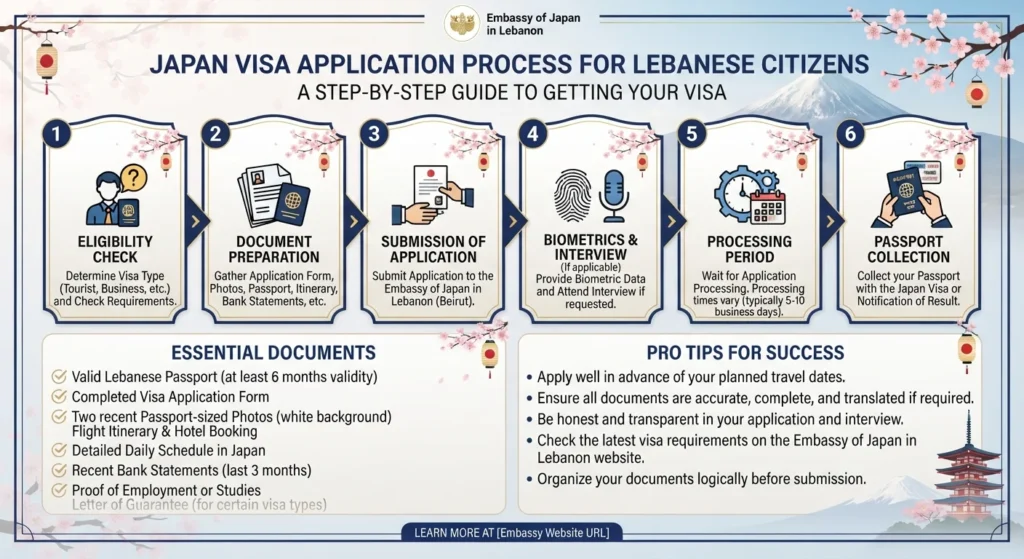
Lebanese passport holders must obtain the visa from the Japanese embassy in Beirut before they travel. The Embassy of Japan in Lebanon publishes its own visa guidance, so start there and treat third-party summaries, including this one, as a starting point only. Procedures such as whether you submit directly or through an authorised agent can change.
What if you are only transiting?
Transit rules can differ from tourist rules. If your connection requires you to leave the airport transit area or stay overnight, you may need a transit visa, and some itineraries need one even without leaving the airport. Check the rules for your route before you buy tickets.
Types of Japan visa you might need
Most Lebanese travelers apply for a short-term stay visa, but the right category depends on your purpose.
Tourist visa
This covers sightseeing, family visits and leisure travel. It is the most common choice for first-time visitors and for spring or autumn trips.
Business visa
Attending meetings, trade fairs and negotiations falls under a business-related short-stay category, with extra documents such as an invitation from the Japanese host company. Our guide to the Schengen business visa explains how invitation letters work in a similar process, though the Japanese requirements differ.
Multiple-entry visas
Some travelers qualify for visas with several entries, which suits frequent visitors. Eligibility and conditions are set by the Japanese authorities, so ask the embassy rather than assuming.
Documents to prepare for a Japan visa application
Every application is different, and the embassy’s current list is the final word. In general, expect to prepare the following.
The basics
A passport with enough validity for your trip and blank pages, a completed application form and recent photographs that meet the specified size. Reference sources commonly mention a validity of at least six months beyond the intended stay, so check the current requirement before you apply.
Travel plans
Japan’s embassy typically asks for a day-by-day itinerary showing where you will be on each date, along with a flight reservation for entry and departure and details of where you will stay. Keep these consistent, since a mismatch between your itinerary and your bookings invites questions.
Proof of funds and ties to Lebanon
Bank statements, salary certificates or business documents show that you can pay for the trip and have reasons to return home. Our guide to Schengen visa financial proof explains how to present statements clearly, and the same principles apply here, including explaining unusual deposits.
Supporting documents
Depending on your situation, you may need an employer letter, a company registration, a guarantor or an invitation letter. If your trip is to visit friends or relatives, the host’s details and relationship evidence matter. Documents in Arabic may need translation, so ask the embassy which languages it accepts.
How to build a day-by-day itinerary that works?
The itinerary is where many applicants stumble, because it feels like a commitment rather than a plan. Treat it as a realistic outline, not a contract. Write each date, the city, the accommodation and the main activities, keeping the route logical so that you are not zigzagging across the country.
Keep it believable
A balanced schedule that matches your budget and stay length looks credible. An itinerary that crams five cities into three days, or one that is mostly empty, can raise questions.
Match it to your bookings
Your hotel reservations should cover the nights you list, and your flights should match your entry and exit dates. Use refundable or cancellable bookings until your visa is approved.
Timeline: how long should you allow?
Processing times vary and the embassy sets them, so confirm the current timeframe. Some reference sources suggest a few weeks, with a recommendation to start at least four to six weeks before your trip. That is a sensible minimum, but for a blossom-season trip you should plan earlier, because you also need time to book hotels and flights.
Planning for cherry blossom season
Cherry blossoms typically bloom from late March to early April, with timing varying by region and year. Hotels and flights for those weeks can sell out months ahead. A comfortable approach is to start your visa application two to three months before travel, so you have room for corrections, then book non-refundable items once the visa arrives.
Working backwards from your travel date
Pick your target dates, subtract the processing time, add a buffer for document gathering and translations and you have the date by which you should start. If that date is close, begin collecting documents now.
What about the fee?
Visa fees depend on the visa type, the number of entries and any service charge, and they have been the subject of changes. Reference sites show different figures, which is a good reminder that you should only trust the embassy’s current fee list. Do not pay any amount quoted by a third-party site without confirming it with the embassy. Ask in what currency fees are paid and how.
Common reasons applications get delayed or refused
Inconsistent documents
Names, dates or addresses that differ across forms and bookings cause delays. Check every page before you submit.
A vague or unrealistic itinerary
Applicants sometimes submit a plan that does not match their stated purpose, budget or stay length.
Weak financial or personal ties evidence
Officers want to see that you can fund the trip and that you will return. Clear, consistent documents help.
Late or incomplete submissions
Missing documents or a rushed timeline leave no room to fix problems. Our guide to common visa rejection reasons explains how officers read files and what to do if something goes wrong.
Travel insurance and practical preparation
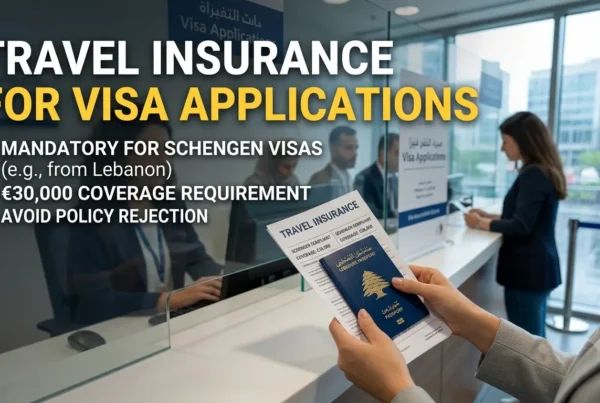
Japan has an excellent healthcare system, but costs for visitors can be high. Travel insurance that covers medical treatment is sensible, and some travelers add cover for cancellations. Our guide to travel insurance for visa applications explains what to look for.
Money and connectivity
Japan is still a cash-friendly country, though cards are widely accepted in cities. Plan how you will pay and carry some yen. Buy a local SIM or eSIM or arrange pocket Wi-Fi before you travel, since navigation matters.
Etiquette and customs
Respect for local etiquette goes a long way: quiet on public transport, no tipping, removing shoes where asked. Check Japan’s customs rules, especially if you carry medication, since some common medicines are restricted.
Combining Japan with the rest of Asia
Many travelers pair Japan with South Korea or Southeast Asia. If your route includes several countries, check each country’s entry rules separately, since a Japan visa does not cover them. Our guides to Singapore visa for Lebanese travelers and the best time to visit Southeast Asia help with the next steps.
Frequently asked questions
Yes. Lebanese passport holders need a visa before travelling, and visa on arrival is not available.
Reference sources indicate that the eVisa is not available for Lebanese citizens. Apply through the Embassy of Japan in Beirut and follow its current instructions.
Processing times vary and the embassy sets them. Allow several weeks, and more if you are planning around cherry blossom season.
Typically a passport, application form, photographs, flight reservation, a day-by-day itinerary, accommodation details and proof of funds and ties to Lebanon. Check the embassy’s current list.
Fees depend on the visa type and can change, and third-party sites show different amounts. Confirm the current fee with the embassy.
Plan your Japan trip with confidence
A smooth visa application starts with a clear itinerary, tidy documents and enough time. Fayad Travel’s visa team can review your file, help you build a realistic day-by-day plan and flag gaps before you submit, so you can focus on the trip itself. Get help with your Japan visa, or explore our Far East packages.